
Pick and Mix
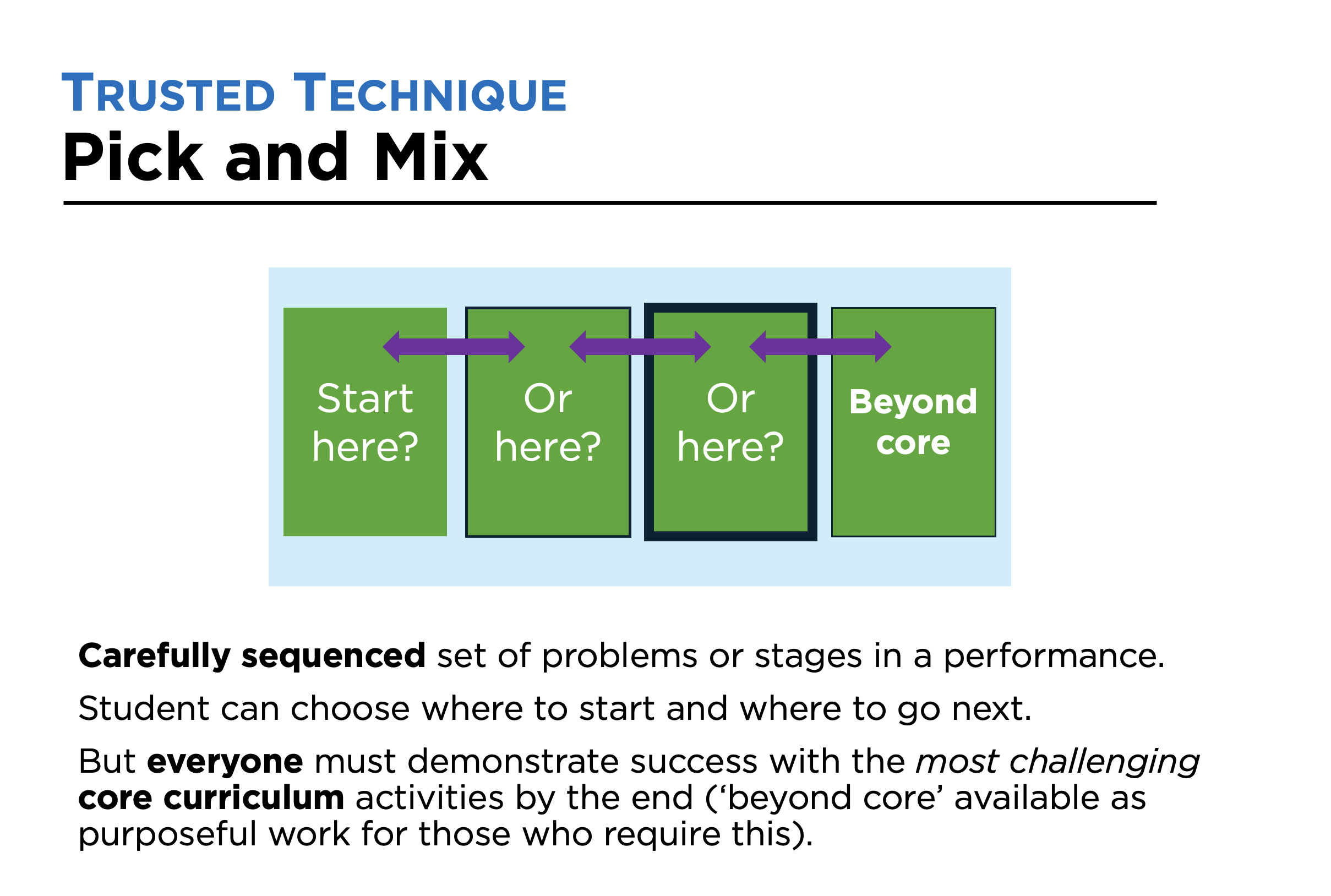
With the technique Pick and Mix, students choose where to start and where to go next in a task that involves increasing levels of challenge.
For example, students in a maths class might be practising how to add fractions. There are 10 problems to solve, which have been carefully sequenced from ‘relatively easy’ to ‘relatively difficult’. Students are told this. They are also told that they can choose which of the problems they answer, but all students must have answered problems 8 to 10 by the end of the 30-minute activity. This is the minimum performance standard for everyone. Some students start at problem 1 and work through every problem, building their confidence. Some start at the beginning but only answer the odd numbered problems. Others start with problem 8 and continue from there. Students who complete problems 8, 9 and 10 successfully move into ‘beyond core’ activities, which might include:
Especially challenging problems (usually, there is no limit to how difficult problems can be)
Alternatively, problems might be grouped as ‘bronze’, ‘silver’ and ‘gold’:
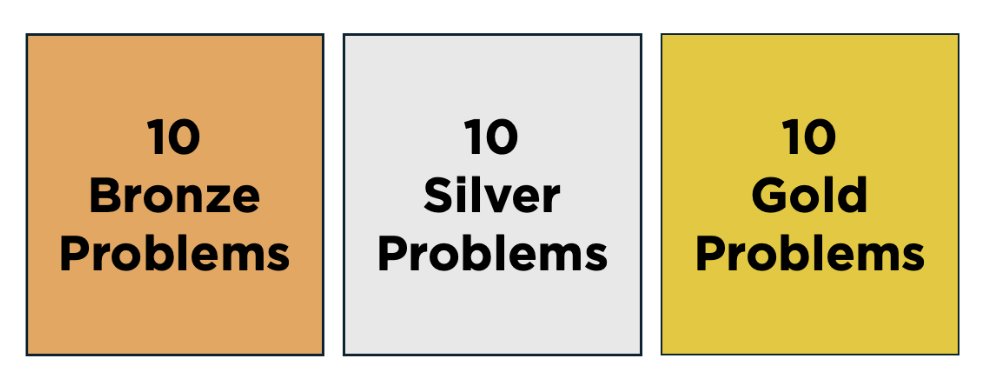
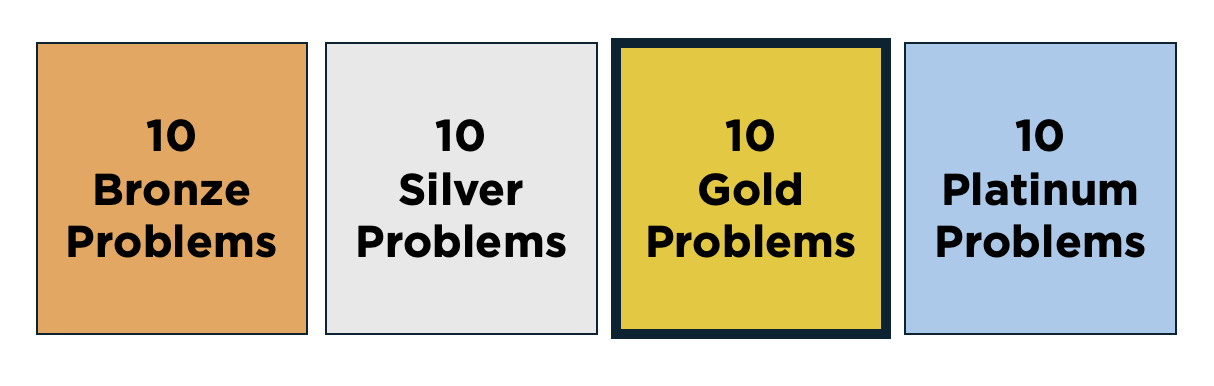
Students get to choose if they want to start with the bronze, silver or gold problems. Once they feel they have had sufficient success at a particular level, they progress to the next one. If they find the problems here too difficult, they go back to the level they were working at for more practice at this level (or ask for help). By the end of the activity, all students are aiming to be working with the ‘gold’ problems. For anyone who has completed these, these are especially challenging problems, framed as ‘platinum’. These go beyond the core curriculum for everyone.
Why use this technique?
Pick and Mix involves differentiated challenge within an activity, helping everyone find a level that works for them. The learning intention is the same for everyone, and so is the task as a whole (up to ‘gold’). However, within a tightly-regulated domain, students can choose where they want to start and where to go next. Some students need to start at bronze; other’s don’t.
Pick and Mix helps to keep the learning of the class is being kept as close together as possible. Importantly, no-one’s learning is being held back because there are opportunities for those who are able to consolidate their learning in the ‘beyond core’ activities.
Focused reflection
How well do you currently use this technique?
Is it a technique you will focus on developing?
If so, what are the key features you will focus on (things to do, and not do)?