
Bounce Back
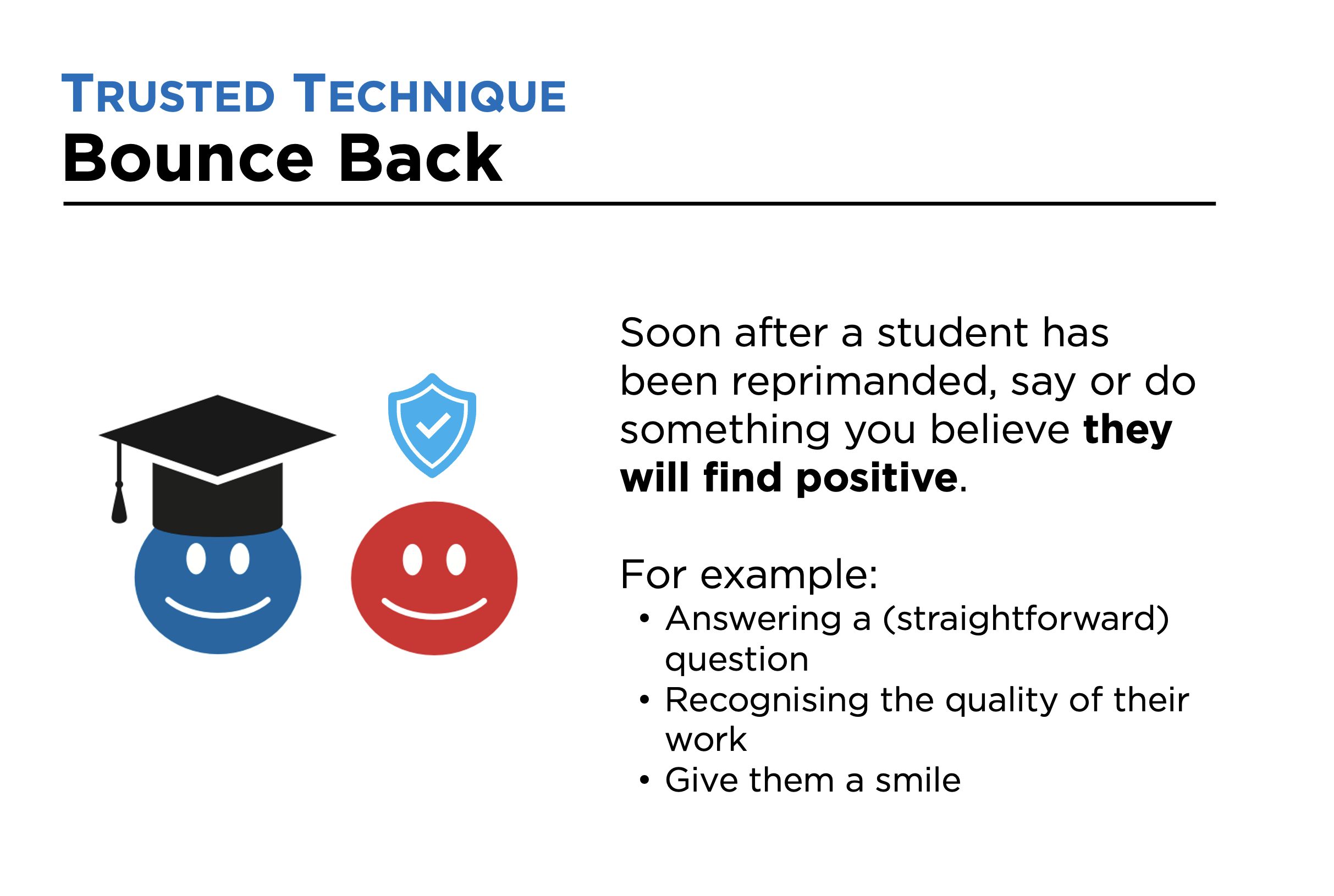
If and when you have used corrections or consequences to address misbehaviour (which are usually perceived negatively), it is important to Bounce Back into positivity as quickly as possible. With regard to any student for whom you have used corrections or consequences, you might do this by:
Making a deliberate effort to recognise something positive. For example, looking at a piece of work, you might say, “I like that”.
Asking them a question you are as certain as possible they will get correct (but a word of warning: if they don’t, this approach can backfire!).
Giving them a smile.
Why use this technique?
Students don’t typically like being told off. This technique can help address any negative mindsets that result from corrections or consequences, re-engaging students in thinking and learning quickly.
Notes and tips
Bounce Back actions tend to be most effective when they are subtle. For example, if you are recognising a piece of work, saying “I like that” will typically have a more positive impact than “Wow - that’s brilliant!”. Overdoing it can lead students to believe we are being insincere, having an inadvertently negative effect.
Focused reflection
How well do you currently use this technique?
Is it a technique you will focus on developing?
If so, what are the key features you will focus on (things to do, and not do)?