
Breathing Space
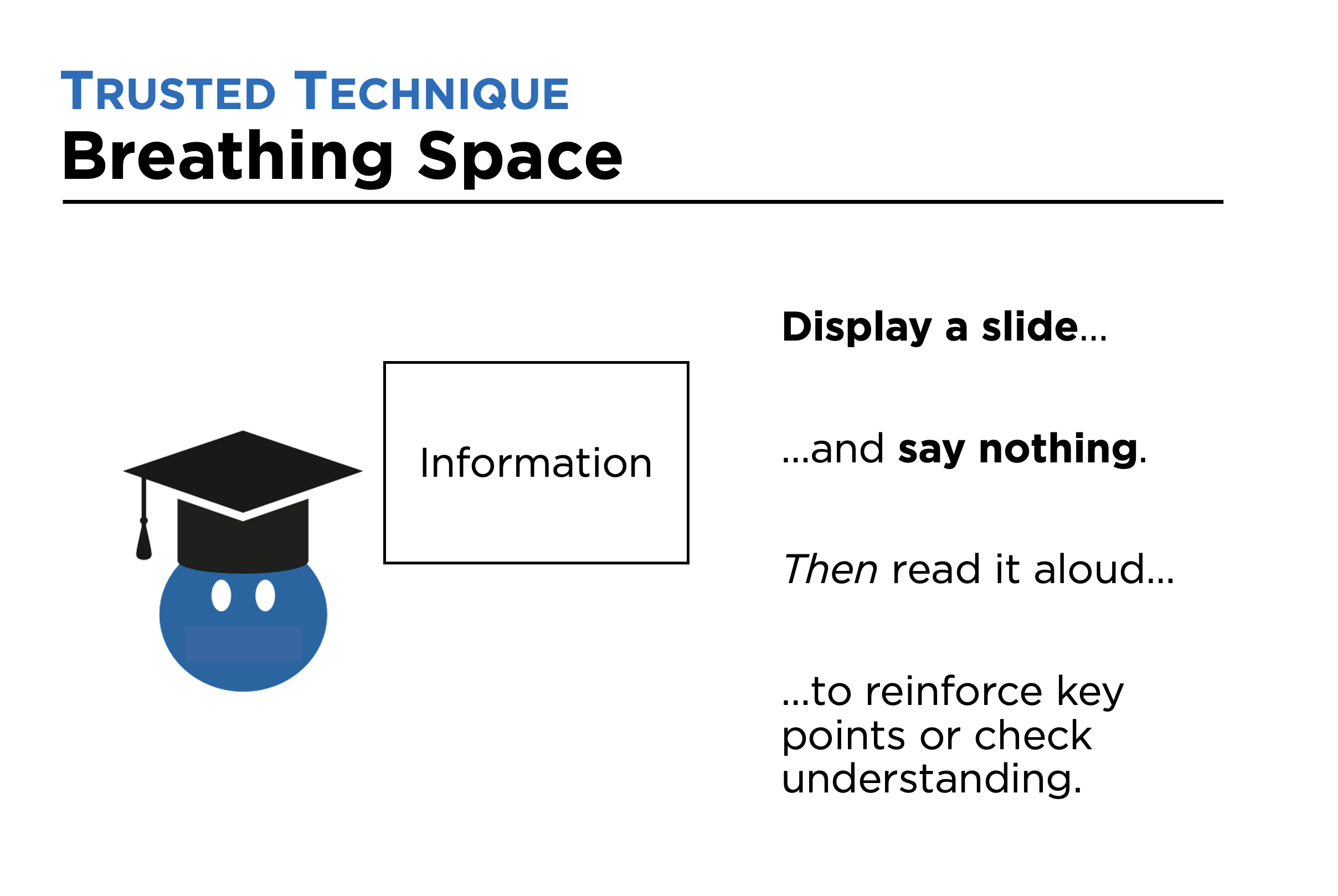
With the technique, Breathing Space, text is displayed (for example, on a PowerPoint slide) and you say nothing until students have had the chance to read this themselves. After students have had time to read the text themselves, you might then read it out, emphasising key words and checking students understand any terminology they might be unsure of.
Why use this technique?
The limits of humans’ working memories mean we can’t process written and spoken words at the same time. If something is being said as it is being read, one of the two forms is redundant, meaning it is unnecessary (this is called ‘the redundancy effect').
While you might think, ‘unnecessary’ doesn’t necessarily mean ‘bad for learning’, often, it does. If students are trying to read something and we are reading this aloud at the same time, their silent reading voice is unlikely to be going at the same speed as our audible spoken voice, meaning our spoken voice competes with their silent voice, getting in the way. This is called ‘the split-attention effect’ and it is bad for learning. The Breathing Space technique is designed to avoid this.
Notes and tips
You might want to teach students the reason you will be using the Breathing Space technique, so they appreciate they should be reading text as it appears, and so they don’t think it’s weird you’ve stopped talking for no apparent reason (when actually, there is a very good reason).
Focused reflection
How well do you currently use this technique?
Is it a technique you will focus on developing?
If so, what are the key features you will focus on (things to do, and not do)?